Saturday, 28 January 2012

Nairobi police

The police have been on a rampage arresting the youth at every corner, street and side road. Imagine you are sitting on a bench near the side of the road. There are several youth gathered waiting for business. They wait to find work conducting in a matatu, they wait to find people who want their shoes cleaned or fixed, they wait to find any available job at all that will give them 30 - 100 shillings (50 cents to a little more than a dollar) so that they can eat.


Two people walk up to the scene. They are young (early twenties), dressed casually, and appear nonchalant. A  question is posed: "what are you guys doing here?", a simple reply: "we are waiting to get work", "Ahhh, so you are idling", "no we are waiting for work", the handcuffs come out, eyes dart for an escape and the youth are off sprinting in any direction away from the police.
 

The police are usually successful at catching one or two people. They haul them down to the police station and come up with a false charge: robbery, public drunkeness, tauting, etc... What the police are looking for ... are bribes. Here are some pictures of police doing what police do best.


I decided it was time to have a little talk with the so called Department of Justice. There were a few different police stations on my radar, first stop: xxx Police. I arrived early in the morning (having been there already the previous night and told what time to come the next day). I was alone, and brought some bread, bananas and milk to give to the youth. While they are offered some food by the police, it is very very little. Their holding cell is a small room containing up to 30 people. No showers are offered, and they are required to participate in hard labour during the day: truly pitiful conditions. A youth can spend up to 2 months in that room with no shower, hard labour and minimal food. They sleep on the floor with no blankets, pillows or mattresses.

I walked into the office, and always enjoy the reaction people have to a white woman visiting the police station in the ghetto. I asked to speak to the OCS in which they directed me to wait outside his office. He called me in shortly thereafter, and I told him that I knew the youth, they were good boys, they were not criminals, and we were working together trying to start an organization. No one dared ask me for a bribe. I was later told that this is because the police are scared that I might report them (not an unfounded suspicion). The OCS was extremely friendly with me, and after a series of questions about my work here in Kenya, he ordered the youth to be released. He gave a short lecture to the youth, and we were on our way. As the youth were let out of the cell, the officers in the station kept asking them "Who is this white woman? How do you know her? Why has she come?"


Next stop: xxx police station. Xxx police station is not a pleasant place, though it is located in a much more serene environment than Xxx. The police here are notoriously corrupt and known for brutality and torture. In fact, the IMLU (Independent Medical Legal Unit) has documented 217 cases of torture by the Xxxx police, and 24 cases of extra-judicial killings. I can assure you, this is an underreported number. Therefore, I felt an urgent need to get down there and help in any way possible. Adrenaline pumping, I approached the office and asked to speak to the officer in charge, the OCS. Again, I entered his office and told him I was a youth advocate, and wanted to know why they were being held, what their charges were, and what the official procedure was. I also told him that I work with these youth, they are of good character, and are not criminals. The OCS listened intently, though not quite as friendly as the last one, but again, did not dare ask me for a bribe. He hauled the youth into the room and asked a series of questions about family, livelihood and dwelling place. After he finished asking these futile questions, and lecturing the youth about his "criminal activity", the meeting adjourned and the youth were released later that day. However, I was informed that someone else had been asked to pay a bribe on behalf of the youth, hence they were not freed without feeding the bribery spiral. It is astonishing that the police are targeting the very poor, those that are barely getting by, the bottom of the pyramid consumers. Here is an example of their living place below.


Again, the holding conditions at this police station are atrocious. Everyone is crammed together into a tiny cell, no beds, blankets, or chairs. They are barely fed, and are expected to stay in the cell for as long as it takes to obtain a verdict from trial. I know some individuals who have been kept in remand for two years! Many youth will plead guilty just to avoid the extremely long wait for trial. The levels of corruption never cease to amaze me. Threats, torture, bribes and murder: the police know no boundaries. There is a Department of Anti-corruption in which you can report such acts of corruption; however, one must be careful when reporting officers as retaliation is all too common if they can figure out your identity. For now, my friends are free, though, they are using extreme caution and are avoiding being seen congregating by the roadside.


It is a new day and there is new hope that lives can change, systems of corruption can be brought to justice, and the impoverished can escape the cycles of poverty. I have been honored with the nickname "Jah Will" instead of Joelle. Jah will be done - there are solutions out there, may we be granted the wisdom to find them.

Sunday, 25 December 2011

Life in Dagoretti


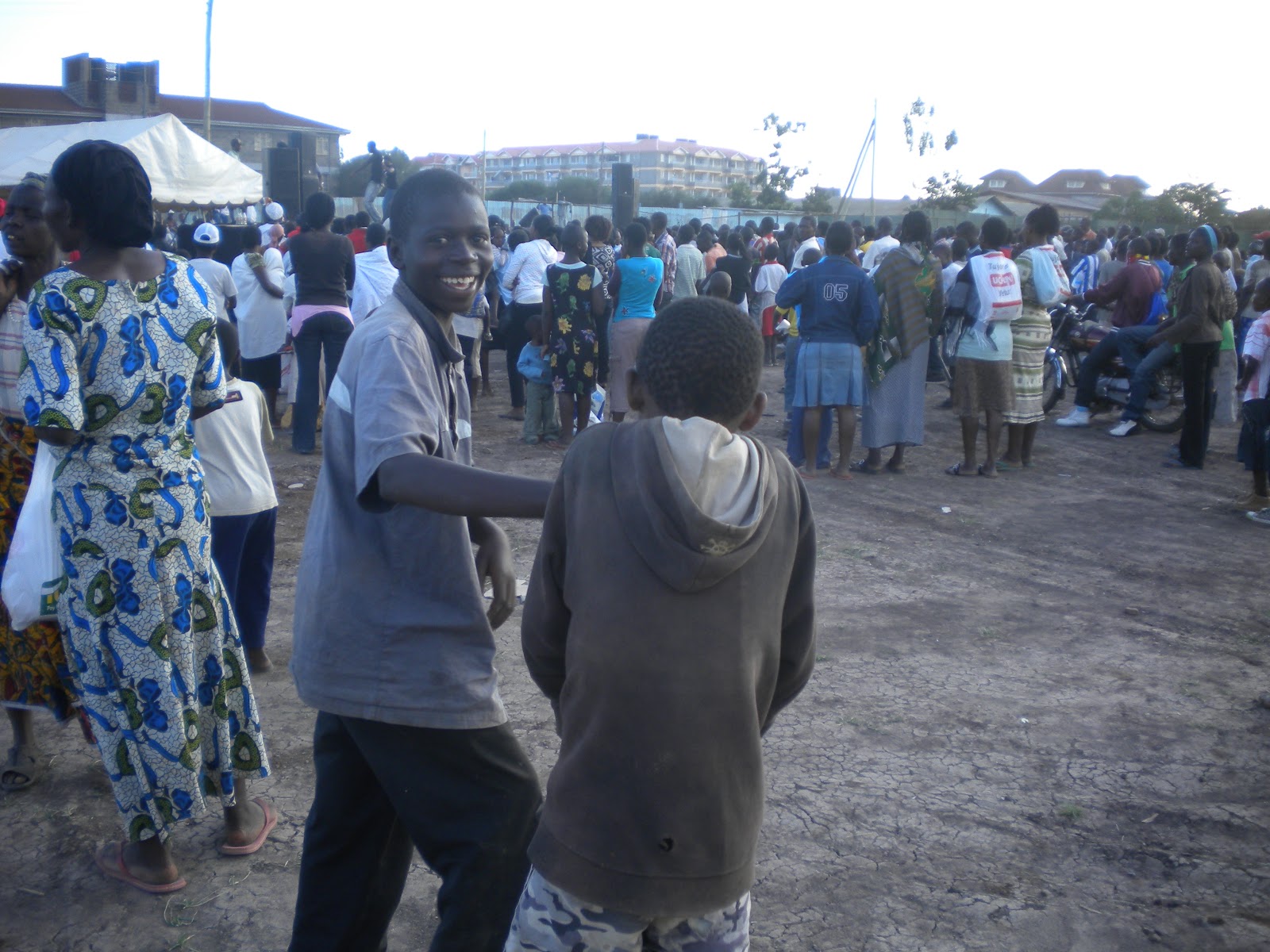
The New Year is right around the corner and I have come to the realization that my time here is limited: a very stressful thought. The longer I stay here in Kenya, the more I hate to leave this place, my projects, and the friends that I have made. Living in Dagoretti has been such a huge blessing, words cannot express my gratitude. On December 12th, a Dagoretti community event was held where food was collected for the less fortunate, football matches were held throughout the day, and the youth showcased their musical talents onstage. To the right is a picture of the event and some of the community members that attended.

My relationships with the street youth has continued to grow, and so has my knowledge about street life and the immense difficulties these youth face. The police are an ongoing source of stress for the youth. Most of the youth have experienced police brutality in some form or another. This ranges from bribes, threats, torture and even murder.  I have seen these youth, street smart survivors, tearfully describing receiving police death threats. I have been told stories about friends who were dragged to the nearby forest and executed at the hands of the police. In fact, just before sitting down at my computer today, the police hauled the driver out of his matatu at Wanyee corner (where I live), and beat him in broad daylight. Below are some of the street youth after being brutalized by police. The youth are intelligent, creative, charismatic individuals and I can see their immense potential. Unfortunately, when you are hungry, tired, sick and cold, it is difficult to apply oneself to the fullest. How can this cycle be broken?


On a lighter note, I also got the opportunity to attend a community event over in Eastleigh. Eastleigh is a suburb of Nairobi predominantly inhabited by Somolians. My language tutor, Nancy Njeri, helped to organize an event for girls in Eastleigh called Ms Mrembo (beautiful in Swahili). The event featured girls football matches followed by a fashion show. During the fashion show girls modelled clothing, hair and make-up, and were asked a number of questions about women's inner beauty. It was a great day, and I made a lot of new friends.


In other news, there is no end to the amount of work and the ways to contribute to both Soweto Academy and Shiriki. I am constantly updating the website: www.haileselassiefoundation.com. Also the blog that we started on our Maragua agricultural initiative has been shortlisted in the youth in agriculture blog competition http://shirikiorganization.blogspot.com/ The winners receive 400,000 Ksh, money that would go a long way in assisting Shiriki's ongoing endeavors.


In addition, we recently submitted a project proposal to the Umande Trust fund. The Umande group has been working with grassroots NGOs located in Kibera. They have provided ongoing training and workshops for these NGOs and recently asked for project proposals for funding. As I have already mentioned, the Shiriki volunteers make a variety of arts for sale, which is the main source of funding for the NGO. We visited a very successful shoe making organization located in Eastleigh called Eco-sandals. They create sandals out of recycled materials, similar to Shiriki, and sell them both locally and internationally. They have acquired machinery to reduce labour time, and have actively reached out to fair trade eco-friendly retail outlets in the western world. They represent a model for which Shiriki is striving to achieve. To the right is a picture of Ras Ng'ang, a Shiriki volunteer, at Eco-sandals in Eastleigh.


As for Soweto Academy, things have also been moving along. I finalized the project proposal to apply for funding to obtain computers in their school. I have sent it out to two different foundations and though I have already received one rejection letter, I am going to keep trying! For the cost of implementing a computer curriculum in their school, it is a very worthwhile project. I am also continuing to research ways to help them obtain the much needed capital to get their water bottling company off the ground. I recently met with the Acumen Fund and talked about their business plan to verify whether Acumen would be an appropriate donor agency in which to submit a proposal. I am not sure if it is a direct fit, nonetheless, I obtained some very good information and suggestions which I have shared with the management over at Soweto.

Last, but not least, my very good friend Theresa came to visit me during Christmas. We had a lot of fun together. We visited the coast, got to go snorkeling, saw dolphins (pictured above), and ate some delicious coastal food. We also spent a lot of time in Nairobi and I got the opportunity to show her a part of my world. She helped me with some of my projects and shared some of her own ideas for both Shiriki and Soweto Academy. Me and Theresa have been friends for over 18 years, and it was a real blessing to have her spend the holidays with me and meet some of the colorful characters I have come to know.

Friday, 18 November 2011

New places, faces and experiences

It has been a long time since my last post. A whole month has flown by, and it has been wrought with good tidings. My mom came to visit in the middle of October until the first week of November. It was a great vacation for me, and we had lots of adventures. We bicycled through the Rift Valley, observed nature at its finest in the Masai Mara, and sampled the best spices and cuisine in Zanzibar! My mom also got to meet both NGOs I am volunteering with, and many of my Kenyan friends. We had a truly wonderful time.
Mom drinking ginger with all the Muslim men in Zanzibar
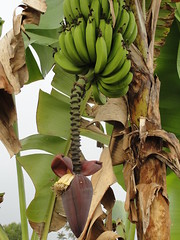
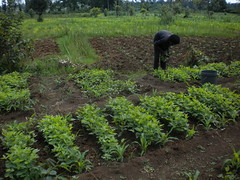
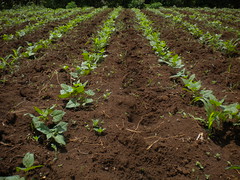
DSC08514The Shiriki farm in Maragua continues to plough forward with much progress. I have been there several times since my last post, and have helped prepare the land, plant, dig and harvest. Maize, beans, banana trees, avocado trees, mango trees, cow-peas, sweet potatoes, irish potatoes, pumpkin, watermelon, arrowroot, yams and sugarcane have all been planted and have sprouted from the earth. We have also contacted our local organic farming magazine “The Organic Farmer”, and an extension officer has visited the farm. He educated all the volunteers on land use efficiency, making organic fertilizer, planting methods, and natural pesticides. Shiriki is hoping to form a long term partnership with the Organic Farmer, and have already talked about using the Maragua farm as a demonstration site where workshops, education and training can be held for local farmers. In addition, their website is now live, as is their blog. We are hoping to forge more partnerships online through these two mediums. Already people seem to be responding positively, and we have been interacting with individuals from all over Africa and Europe.

086 070
In other news, last Saturday, the pre-units (equivalent to kindergarten), standard 8 (equivalent to grade 8) and form 4 (equivalent to grade 12) from Soweto Academy graduated. Chris (visionary and founder) made sure to hold a special event for the students to fully celebrate their accomplishments of finishing school. There were tents, loudspeakers, music, picture booths, performances, and representatives from government all present to wish the students well. A curious statement was made at the closing of the graduation ceremony; the Board of Directors wife was giving a closing speech to the secondary school graduates, and she said "Now that you have graduated, you are ready to get married?" And everyone, including her, shouted "NO". Soweto Academy really encourages the girls to follow a set career plan and become the new leaders in Kenya. Not that marriage negates this opportunity; however, traditionally, young marriages for the youth in Kibera result in domestic roles and duties where their capacity building as individuals, and ability to follow their own goals is highly compromised.


To give you a flavour of what it was like, here is are some short videos of two of the performances. The first video is of the students performing a traditional Luo song. The second video is of a skip rope gymnastic performance whereby children were trained by an NGO that is based in Kibera. This NGO trains children who show a natural inclination and talent for gymnastics. I am not sure what other benefits this NGO offers, if the children are given schooling, or they charge for performances; nonetheless, it was a very entertaining crew, and everyone in the audience enjoyed watching their amazing skill.


For my Soweto Academy projects, I have finished a draft proposal to apply for funding to receive computers in the school. The total amount required is more than originally anticipated as they do not only require computers, but the construction of a building, and 5 weeks of training for both the principal and the ICT Tutor. The total amount is approximately 1.3 million Kenyan shillings (equivalent to about $15,000 dollars). Part of Kenya’s Vision 2030 is to move from a developing country to a middle income country and they have set out several pillars and sectors to accomplish same. Information and communication technology makes up a substantial part of the plan. Indeed, investment in girl’s schooling is one of the most powerful ways to address poverty and gender norms. Information and computer technology has been shown to increase both social and economic development in health, education, employment, even culture. Computers can make a significant difference in the future outcome for these girls. I am certain that this is a project worth pursuing, so will continue upwards, and the search for donors continues!

Bottling tank at Soweto
I am also continuing with the plan to expand Soweto Academy’s water bottling company, which would make the institution 100% self-sustaining. The most pressing need is the purchase of a transport vehicle for the company. Currently, they need to rely on middle men to make deliveries to different organizations – this results in huge profit losses for the organization. Middle men represent a significant source for profit loss in many of Kenya’s sectors. Indeed, this is the same challenge faced in agriculture, fishing, arts and other commodities. Once we can purchase a van, the marketing can begin.
Daniel (Joogan)
In other areas, I have been privileged to get to know the youth that live in my neighbourhood, and next to my tutor, they are great Swahili teachers. Below are some of the faces of my neighborhood youth. The youth sit at the corner of Wanyee road, where I live, and they hustle (look for work) to find money. Several of these youth have survived on the streets from a young age. The Kenyan political climate is specifically relevant to these individuals. They are already worried about the upcoming 2012 elections, and it doesn’t make one too comfortable to know that two of the presidential candidates are currently being tried at the Hague for inciting violence from the 2007 post election results. The youth have told me they lost many friends in 2007, some even saw their peers shot down in the street.

Here is a little background on Kenya's current political climate. Politicians, in Kenya, are some of the wealthiest citizens in the country, where one’s most significant arsenal for political power comes directly from the amount of income at their disposal. The last two presidents have been Kikuyu (who have held power for the last 25 years). If Odinga (the current Prime Minister) and a Luo, is the successor, (and many think he will be) it has been said that he will dismantle the multi-billion business empires built up over the last 25 years by the wealthy Kikuyu political families. It is no wonder an alliance (G7) has been formed in an attempt to stop Odinga from succeeding. This makes one all the more worried about the outcome of the next election. It is a very sad thing that the ones to suffer from this political greed are some of the most disadvantaged members of Kenyan society.
Rajaab and Shuba
Apart from the downside of ghetto living, these youth are some of the most generous people one can meet. One evening a discussion started about living in the “deep ghetto” as they call it. The deep ghetto is defined as living in the heart of the slums. They were saying that they all knew what it was like to be cold, to go hungry, to be homeless, and therefore when they see people asking for money in the street, they share what they have, share meals, a warm bed, or a few shillings. Community links are incredibly strong here, and as I walk through the slums, down the garbage filled alley ways, I am not surprised that they are greeting nearly every other person who passes by. While they continue to struggle with poverty, disease and lack of opportunity, loneliness does not appear to be one of the challenges.